


Container houses are one of the fastest-growing housing trends worldwide. The global container homes market reached $75.2 billion in 2026 and is projected to hit $119.2 billion by 2033. This guide covers everything about container houses costs, designs, building processes, regulations, and real examples from around the world.
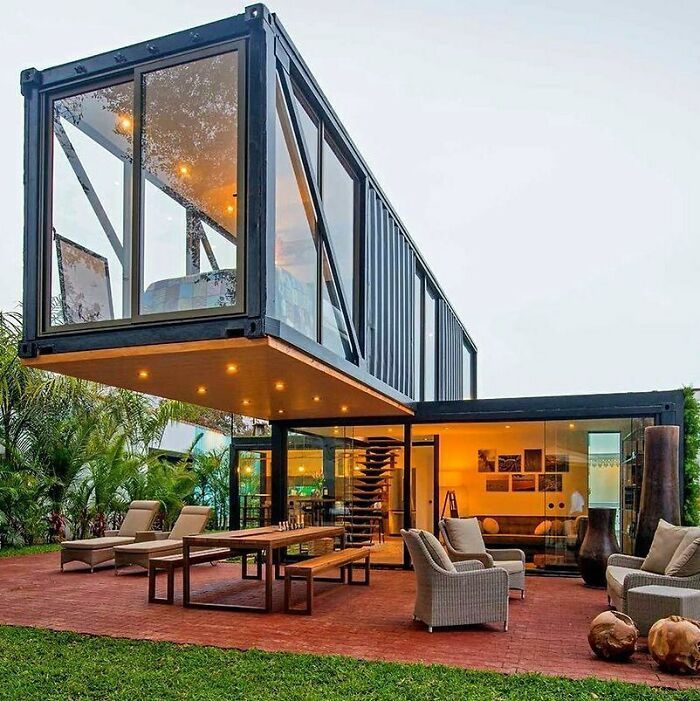
A container house is a dwelling built from steel shipping containers. These standardized metal boxes originally transport goods across oceans. Architects and builders transform them into modern homes using either new or used containers.
| Container Type | Dimensions | Square Footage |
| 20-foot container | 20ft x 8ft x 8.5ft | 160 sq ft |
| 40-foot container | 40ft x 8ft x 8.5ft | 320 sq ft |
| 40-foot high cube | 40ft x 8ft x 9.5ft | 320 sq ft (extra height) |
| Condition | Description | Price Range |
| One-trip (like new) | Barely used, near-perfect condition | $5,000 – $8,000 |
| Cargo-worthy | Good structural condition | $2,500 – $4,500 |
| Wind and water tight | Serviceable condition | $1,500 – $3,000 |
| As-is | Needs repairs | $1,000 – $2,000 |
Rising housing costs, urban population growth, and environmental concerns drive container house adoption globally. Container houses cost 30% to 50% less than conventional construction.
| House Type | Size | Average Cost | Potential Savings |
| Traditional home | 1,000 sq ft | $100,000 – $150,000 | — |
| Container home | 1,000 sq ft | $50,000 – $100,000 | $50,000+ |
| Build Type | Estimated Timeline |
| Traditional house | 6 to 12 months |
| Container house (factory-built) | 8 to 12 weeks |
| Container house (DIY) | 3 to 6 months |
| Container house (prefab) | 2 to 4 months |
| Home Size | DIY Conversion | Professional Build | Prefab Delivery |
| Basic (160–320 sq ft) | $10,000 – $30,000 | $25,000 – $60,000 | $35,000 – $80,000 |
| Mid-range (640–1,000 sq ft) | $40,000 – $80,000 | $80,000 – $140,000 | $100,000 – $160,000 |
| Luxury (1,200–2,500 sq ft) | — | $150,000 – $300,000+ | $200,000 – $500,000+ |
| Region | Basic | Standard | Luxury |
| North America (USA, Canada) | $35,000 – $75,000 | $100,000 – $180,000 | $200,000 – $400,000 |
| Europe (UK, Germany, Netherlands) | €30,000 – €65,000 | €85,000 – €160,000 | €180,000 – €380,000 |
| Asia-Pacific (Australia, Japan) | $40,000 – $80,000 AUD | $110,000 – $200,000 | $220,000 – $450,000 |
| Africa (Kenya, South Africa) | $15,000 – $40,000 | $50,000 – $100,000 | $120,000 – $250,000 |
| Middle East (UAE, Saudi Arabia) | $45,000 – $90,000 | $120,000 – $220,000 | $250,000 – $600,000 |
| Component | Estimated Cost |
| Container purchase (40ft used) | $1,500 – $4,500 |
| Container delivery | $1,000 – $3,000 |
| Foundation | $3,000 – $8,000 |
| Cutting and framing | $2,000 – $6,000 |
| Insulation | $2,000 – $5,000 |
| Windows and doors | $3,000 – $10,000 |
| Interior framing | $2,000 – $5,000 |
| Plumbing | $3,000 – $8,000 |
| Electrical | $3,000 – $8,000 |
| HVAC | $2,000 – $6,000 |
| Interior finishing | $5,000 – $15,000 |
| Exterior finishing | $2,000 – $6,000 |
| Permits and fees | $1,000 – $5,000 |
| TOTAL (basic build) | $30,000 – $90,000 |
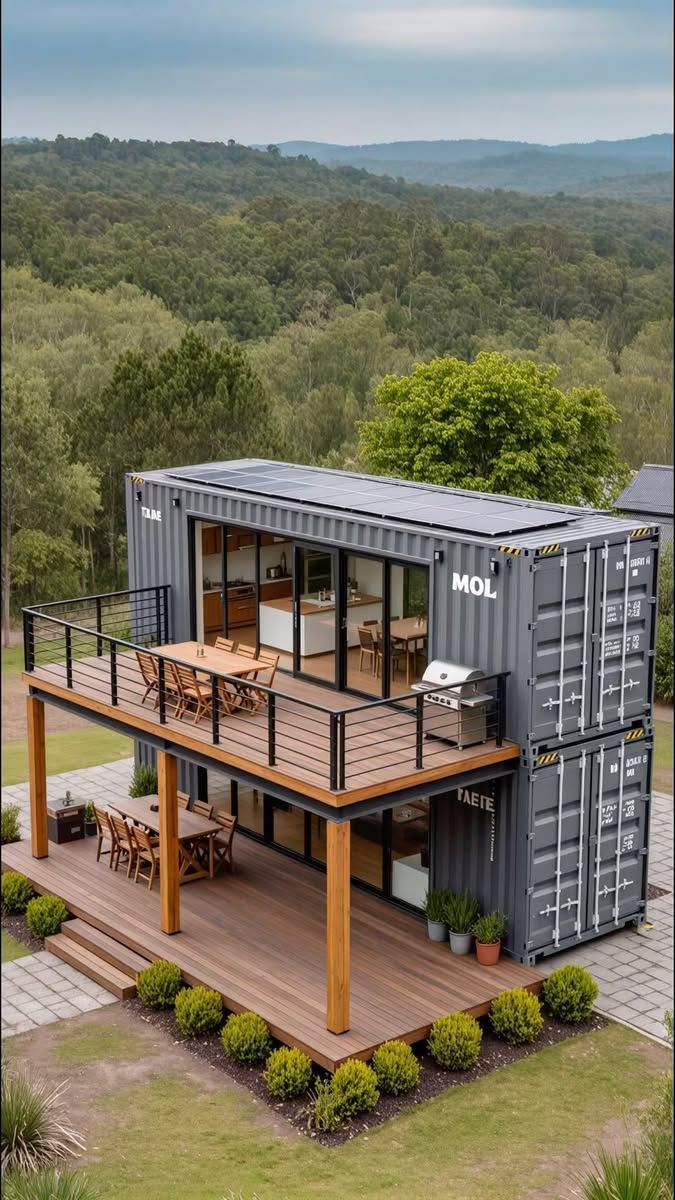
One container creates compact living spaces. Perfect for minimalist lifestyles or temporary housing. Size ranges from 160 to 320 square feet.
Multiple containers combine to create larger residences. Containers can stack vertically or be arranged horizontally.
| Configuration | Approximate Size |
| Two containers side-by-side | 640 sq ft |
| Four containers in square | 1,280 sq ft |
| Eight containers multi-level | 2,560 sq ft |
Factory-built container homes arrive ready for installation, complete with plumbing, electrical, and finishes. Delivery typically takes 8 to 16 weeks, with installation in 1 to 3 days.
| Manufacturer | Region |
| Honomobo | North America |
| Royal Wolf | Australia |
| Supertech Industries | Asia |
| Container Homes USA | USA |
| SG Blocks | USA |
| Feature Category | Details |
| Interiors | Designer materials, high-end appliances, custom cabinetry |
| Exteriors | Large glass walls, rooftop decks, swimming pools |
| Technology | Smart home automation, energy monitoring |
| Sustainability | Solar power, rainwater harvesting, greywater recycling |
| Typical Cost | $200,000 – $500,000+ |
| Style | Key Features | Best For |
| Modern Minimalist | Clean lines, exposed steel, floor-to-ceiling windows | Urban settings |
| Industrial Chic | Corrugated metal walls, Edison bulbs, concrete countertops | Loft-style living |
| Contemporary Luxury | Wood cladding, marble surfaces, hidden storage | Upscale residential |
| Tropical Modern | Large sliding doors, covered patios, natural wood | Warm climates |
| Scandinavian | Light wood, white walls, minimal decoration | Nordic/temperate climates |
| Off-Grid Design | Solar panels, rainwater collection, composting systems | Remote/rural locations |
The building process involves ten key steps. Timelines vary by build type: DIY takes 3–6 months, contractor 4–8 months, and prefab 2–4 months.
| Step | Activity | Timeline | Estimated Cost |
| 1 | Planning and Design | 2–8 weeks | Variable |
| 2 | Land and Permits | 4–12 weeks | $1,000–$5,000 |
| 3 | Container Purchase | 1–2 weeks | $1,500–$8,000 |
| 4 | Site Preparation | 1–3 weeks | $3,000–$10,000 |
| 5 | Container Modifications | 1–2 weeks | $2,000–$8,000 |
| 6 | Insulation Installation | 1–2 weeks | $2,000–$6,000 |
| 7 | Install Systems (Plumbing/Electrical/HVAC) | 2–4 weeks | $8,000–$20,000 |
| 8 | Interior & Exterior Finishing | 3–6 weeks | $10,000–$35,000 |
| 9 | Final Installations | 1–2 weeks | Variable |
| 10 | Inspection and Move-In | 1–2 weeks | Included in permits |
| Foundation Type | Cost Range | Best Used For |
| Pier foundation | $3,000 – $6,000 | Level sites, single containers |
| Strip foundation | $4,000 – $8,000 | Multi-container builds |
| Slab foundation | $5,000 – $10,000 | Permanent structures |
| Concrete footings | $2,000 – $5,000 | Light or temporary builds |
| Insulation Type | R-Value per Inch | Cost per Sq Ft | Climate Recommendation |
| Spray foam | R-6 to R-7 | $1.50 – $3.00 | All climates |
| Rigid foam boards | R-5 | $0.80 – $1.50 | Moderate climates |
| Mineral wool | R-4 | $1.00 – $2.00 | Cold to moderate |
| Climate | Recommended R-Value |
| Hot climates | R-13 to R-19 |
| Moderate climates | R-19 to R-25 |
| Cold climates | R-25 to R-38 |
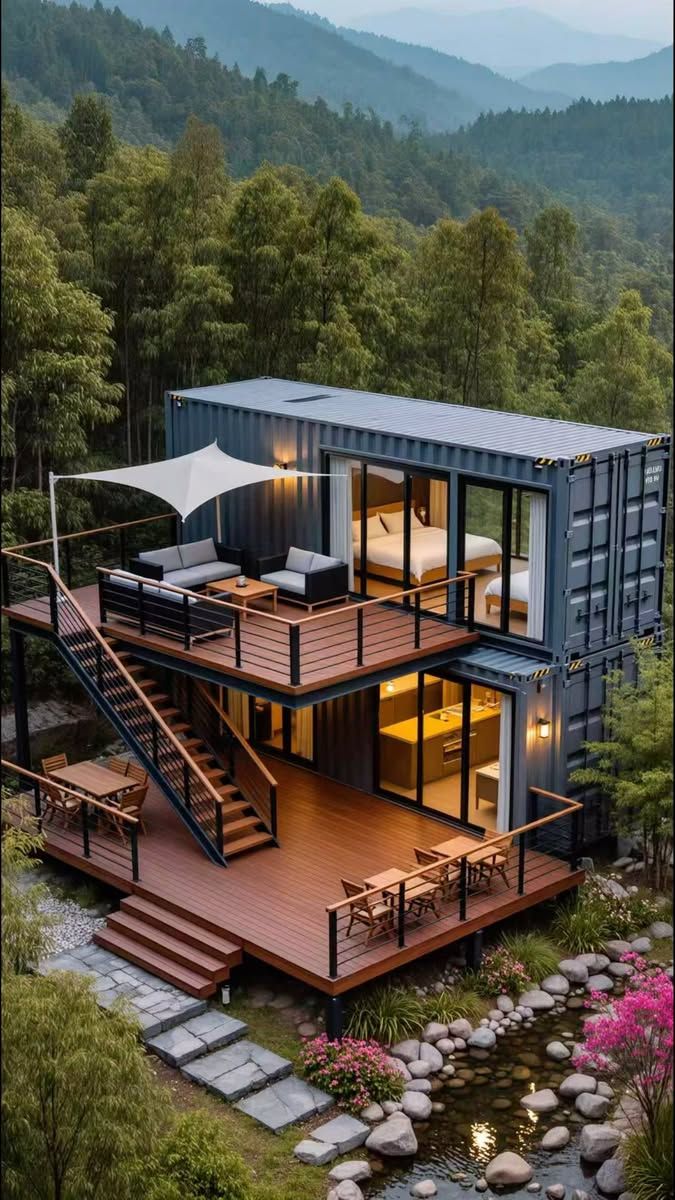
| Plan Type | Containers Needed | Total Size | Estimated Cost |
| Studio | 1 x 20ft | ~160 sq ft | $15,000 – $40,000 |
| 1 Bedroom | 1 x 40ft or 2 x 20ft | 280–350 sq ft | $30,000 – $70,000 |
| 2 Bedroom | 2–3 containers | 520–660 sq ft | $60,000 – $120,000 |
| 3 Bedroom | 4–6 containers | 930–1,140 sq ft | $100,000 – $200,000 |
| Luxury / Multi-level | 8+ containers | 2,000–3,500 sq ft | $250,000 – $600,000+ |
| Room | Approximate Size |
| Master bedroom with ensuite | 180–220 sq ft |
| Two additional bedrooms | 200–240 sq ft (combined) |
| Two bathrooms | 120–150 sq ft (combined) |
| Kitchen | 100–130 sq ft |
| Living / dining area | 250–300 sq ft |
| Utility / storage | 80–100 sq ft |
| Total | 930–1,140 sq ft |
| Country / Region | Key Requirements | Notes |
| United States | IBC compliance, zoning approval, energy codes | Varies by state; best: TX, CA, CO, OR, NC |
| United Kingdom | Planning permission, building regulations, fire safety | Approval: 8–16 weeks |
| Australia | Development approval, energy efficiency rating | Popular: QLD, NSW, VIC |
| Canada | National Building Code, frost-proof foundations, snow load | Best: BC, Alberta, Ontario |
| Kenya / Africa | County building approval, environmental impact assessment | Growing affordable housing use |
| European Union | CE marking, energy performance directive, country codes | Leading: NL, Germany, Belgium, Denmark |
| Advantage | Details |
| Cost Savings | 30–50% less than traditional homes; reduced labor and material waste |
| Speed of Construction | Factory-built units ready in weeks; on-site assembly in days |
| Durability | Steel withstands harsh weather; earthquake and hurricane resistant; 25+ year lifespan |
| Sustainability | Recycles existing steel; reduces construction waste; integrates green systems |
| Flexibility | Modular expansion; portable; adaptable layouts; multiple design options |
| Disadvantage | Details |
| Size Limitations | Standard containers only 8 feet wide; low ceiling height |
| Insulation Challenges | Metal conducts heat/cold; condensation issues without quality insulation |
| Permits and Zoning | Some areas prohibit container homes; financing can be difficult |
| Structural Modifications | Cutting weakens structure; requires professional engineering; reinforcement adds cost |
| Rust and Corrosion | Requires regular rust treatment; coastal areas face additional challenges |
| Room | Key Design Tips |
| Kitchen | Galley-style layout; compact appliances; wall-mounted cabinets; open shelving |
| Bathroom | Corner showers; wall-mounted toilets; pocket or sliding doors; light colors |
| Living Area | Minimal furniture; large mirrors; multi-use zones; indoor-outdoor flow |
| Bedroom | Platform beds with storage; built-in wardrobes; loft sleeping in high cube containers |
| Principle | Recommendation |
| Wall color | White or light neutrals to expand perceived space |
| Natural light | Maximize with large windows, glass doors, and skylights |
| Artificial lighting | LED throughout; accent lighting for visual interest |
| Mirrors | Strategic placement to create depth |
| Project | Details | Cost |
| California Luxury Container Home | 8 x 40ft containers, 3,200 sq ft, 3 stories, solar powered | $420,000 |
| Texas Container Ranch | 4 containers, 1,280 sq ft, 2 bed/2 bath, DIY build | $85,000 |
| Canadian Off-Grid Container | 2 x 40ft high cubes, 640 sq ft, complete off-grid, remote mountain | $95,000 |
| Project | Details | Cost |
| Amsterdam Container Village | 1,000-unit student housing complex | N/A |
| UK Luxury Container Estate | 6 containers, 2,100 sq ft, pool and gardens | £280,000 |
| Berlin Container Hotel | 30 container rooms, award-winning sustainable design | N/A |
| Project | Location | Details | Cost |
| Micro Container Home | Tokyo, Japan | Single 20ft, 160 sq ft, ultra-minimalist | ¥3,500,000 (~$30,000) |
| Beachfront Container | Australia | 3 x 40ft, ocean views, sustainable features | AUD $240,000 |
| Affordable Housing Estate | Kenya | 200-unit planned development | $25,000/unit |
| Container Resort | South Africa | Luxury vacation rentals, wine country | R1,800,000/unit |
| Financing Type | Key Terms | Interest Rate | Best For |
| Traditional Mortgage | Permanent foundation required; 20–30% down | Market rate + | Permanent builds |
| Construction Loan | 6–12 months; converts to mortgage | 6% – 10% | New builds |
| Personal Loan | $10K–$100K; 3–7 year repayment | 8% – 18% | Small builds |
| Home Equity Loan/HELOC | Uses existing property equity | 5% – 9% | Existing homeowners |
| Cash Payment | Full payment upfront | 0% | Small/simple projects |
| Manufacturer Financing | Offered by some prefab builders | Competitive | Prefab purchases |
| Frequency | Items to Inspect |
| Monthly | Roof leaks, window/door seals, plumbing leaks, HVAC filters, pest signs |
| Quarterly | Exterior paint/coating, rust spots, foundation settling, caulking, drainage |
| Annually | Full roof inspection, structural integrity, all systems service, insulation, exterior treatments |
| Stage | Action |
| Prevention | Apply quality primer and paint; maintain roof coating; keep drainage clear |
| Detection | Inspect quarterly; check all exterior seams and penetrations |
| Treatment | Wire brush affected area; apply rust converter; prime and repaint; monitor |
| System Type | Options |
| Heating | Mini-split heat pumps, radiant floor heating, traditional HVAC, wood/pellet stoves |
| Cooling | Mini-split AC, central AC, ceiling fans, shade structures, reflective roof coating |
| Metric | Value |
| Market size (2026) | $75.2 billion |
| Projected size (2033) | $119.2 billion |
| Annual growth rate (CAGR) | 6.8% |
| Fastest-growing segment | Movable / portable container homes |
| Highest growth region | Asia-Pacific |
| Application | Description |
| Disaster relief housing | Rapid deployment for crisis zones |
| Medical facilities | Mobile clinics and field hospitals |
| Remote work offices | Off-grid personal or co-working offices |
| Vacation rentals | Boutique container hotels and eco-resorts |
| Co-living communities | Urban affordable shared housing |
| Retail and restaurants | Pop-up shops and container food markets |
| Agricultural buildings | Farm storage and rural worker accommodation |
| Technology | Application |
| Automated climate control | Smart HVAC management via app |
| Security systems | Remote monitoring and access control |
| Energy monitoring | Real-time solar and battery tracking |
| Solar integration | Rooftop panels standard in new builds |
| Battery storage | Off-grid and backup power systems |
Container homes cost between $10,000 and $500,000+ depending on size, finish, and build method — typically 30–50% less than traditional construction. A basic single-container home (160–320 sq ft) costs $10,000–$60,000. A mid-range 2–3 bedroom home (640–1,000 sq ft) runs $80,000–$160,000. Luxury multi-container homes (1,200–2,500 sq ft) cost $150,000–$500,000+.
The cheapest method is a single-container DIY conversion using a used 40ft container, costing as little as $10,000–$30,000. To minimize costs: buy a used wind-and-water-tight container ($1,500–$3,000), use a pier foundation ($3,000–$6,000), do modifications and finishing yourself, avoid structural cuts, and keep the floor plan simple.
es, mortgages are available for container homes but requirements are stricter than traditional homes. The home must be on a permanent foundation, meet local building codes, and pass a property appraisal. Expect a 20–30% down payment. Local credit unions and community banks are the most likely to approve. Construction loans (6–10% interest) are another option, and many buyers simply pay cash.
A container house takes 2 to 8 months to build. A prefab factory-built home is ready in 8–12 weeks. A DIY build takes 3–6 months. A contractor-built home takes 4–8 months. By comparison, a traditional house takes 6–12 months.
One 40ft container gives 320 sq ft — suitable for a studio. Two containers give 640 sq ft for a 1-bedroom home. Three to four containers create 960–1,280 sq ft for a 2–3 bedroom home. Six to eight containers provide 1,920–2,560 sq ft for a large family home. Most families need at least four 40-foot containers for a comfortable 3-bedroom layout.
Container houses are legal in most countries but always require building permits, zoning approval, and compliance with local building codes. In the USA, regulations vary by state — Texas, California, Colorado, Oregon, and North Carolina are among the most container-home friendly. In the UK, planning permission is required. In Australia, development approval is mandatory. Always verify local zoning laws before purchasing land or containers.


